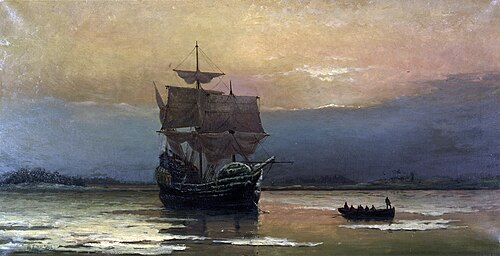
Mayflower
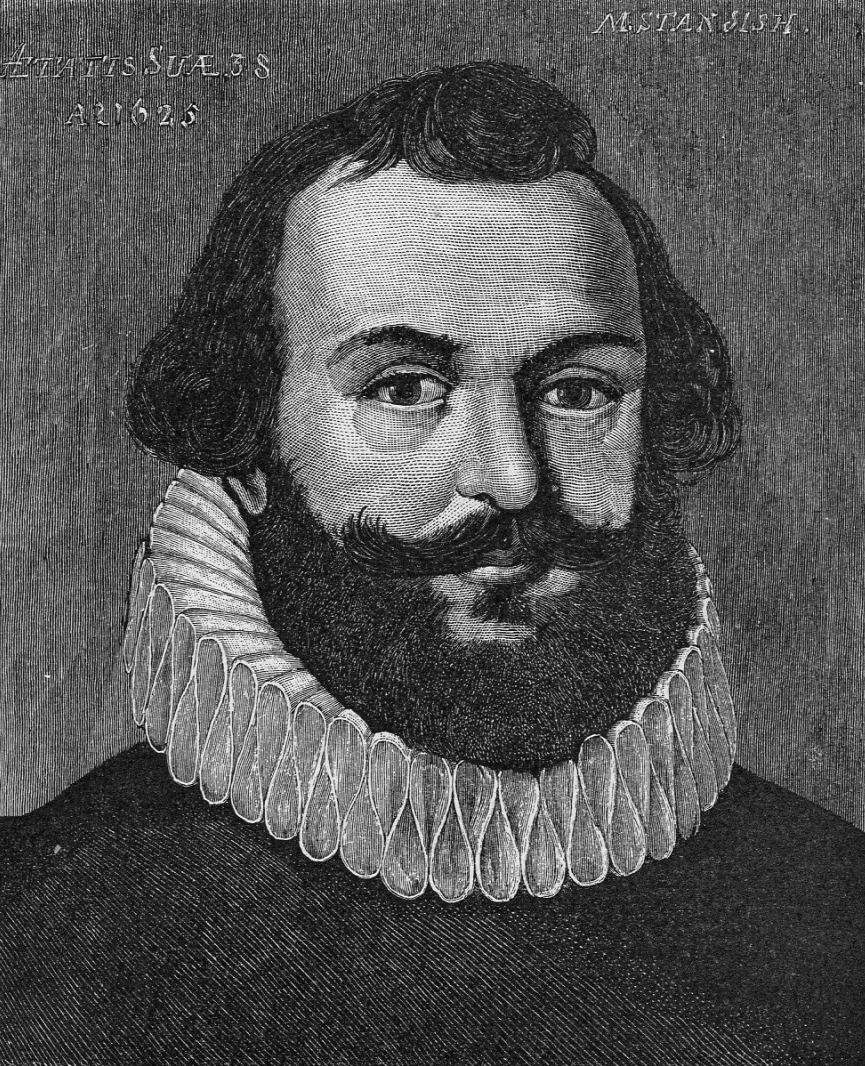
Myles Standish
.jpg)
John and Priscilla Alden
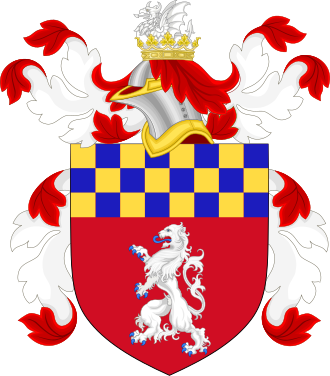
Warren Coat of Arms
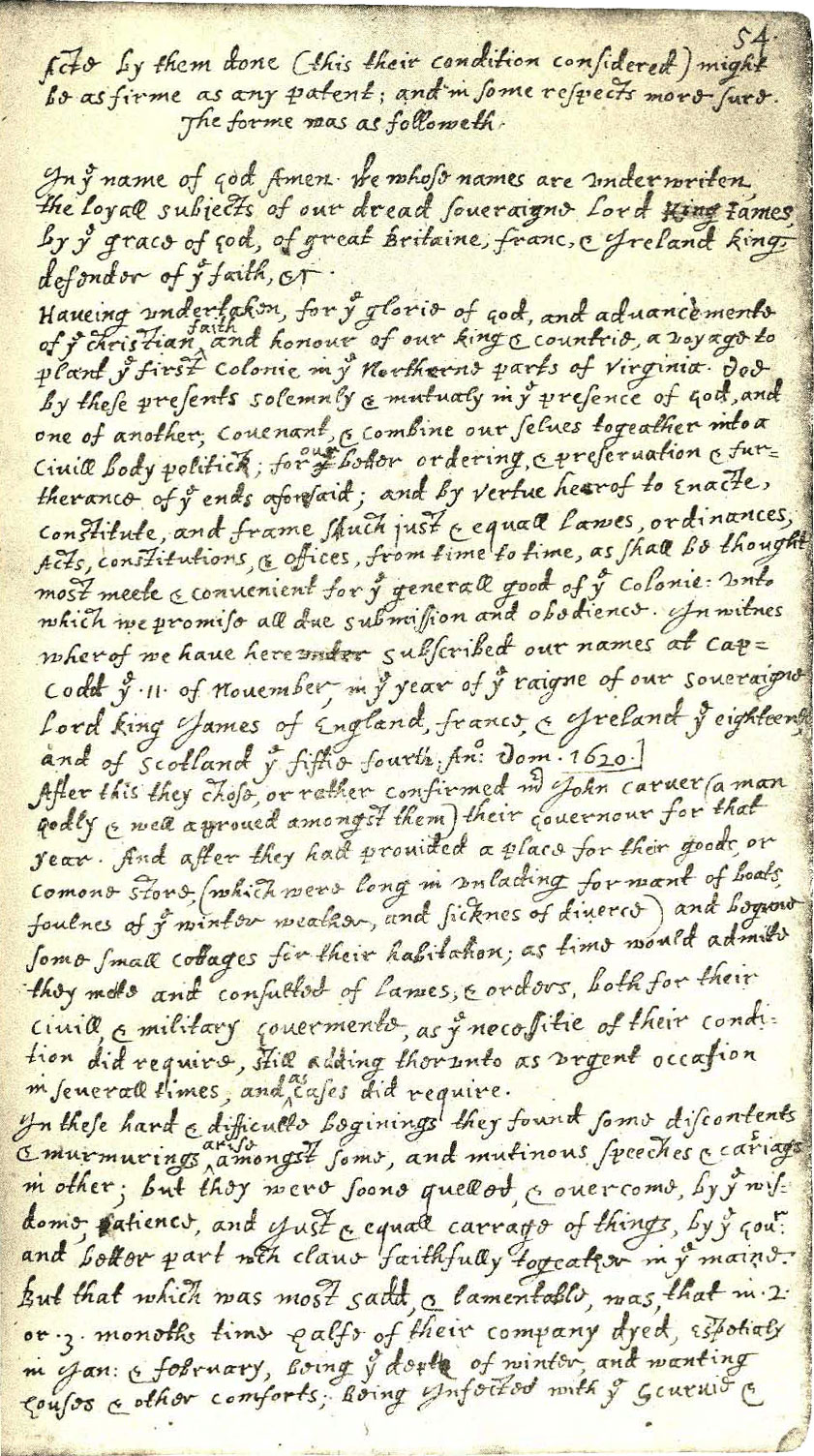
Mayflower Compact
Our Mayflower Ancestors
The
Mayflower Passenger List
History of Plymouth plantation / by William Bradford c.1
There were four groups of people aboard the Mayflower sailing
ship that brought the PILGRIMS to Plymouth, Massachusetts.
Pilgrims, Passengers, Crew and Servants.
Nine of them were ancestors of my mother, Evelyn Belden
Ralston.
They are listed in the chart below.
Click on the persons name to view information at Wikipedia;
Click on their relationship to see details about their
connecction to me.
| Name | Group | Relationship | Memorial |
Banks Book Page see note below. |
| Myles Standish | Mayflower Passenger | Ninth great grandfather | Find A Grave | 82 |
| Peter Browne | Mayflower Passenger | 9th great grandfather | 41 | |
| John Alden | Mayflower Crew | ninth great grandfather | 27 | |
| Priscilla (Mullins) Alden | Mayflower Passenger | ninth great grandmother | 28 | |
| William Mullins | Mayflower Passenger | Tenth great grandfather | FindAGrave | 73 |
| Alice (Unknown) Mullins | Mayflower Pilgrim | Tenth great grandmother | FindAGrave | 74 |
| Richard Warren | Mayflower Passenger | Tenth great grandfather | FindAGrave | 92 |
| Edward Doty Sr. | Mayflower Servant of Stephen Hopkins (a pilgrim) | Tenth great grandfather | FindAGrave | 51 |
| Francis Cooke | Mayflower Pilgrim | 11th great grandfather | FindAGrave | 47 |
The English ancestry and homes of the Pilgrim Fathers who came to Plymouth on the "Mayflower" in 1620, the "Fortune" in 1621, and the "Anne" and the "Little James" in 1623 by Banks, Charles Edward, 1854-1931
Mayflower
Myles Standish
John and Priscilla Alden
Warren Coat of Arms
Mayflower Compact
The following taken from Wikipedia
The Mayflower departed Plymouth, England, on September 6, 1620, with 102 passengers and about 30 crew members, 74 men and 28 women, in the 106 feet (32 m) long ship. The seas were not severe during the first month on the Atlantic, but in the second month the ship was badly shaken by strong north-Atlantic winter gales, causing leaks from structural damage. There were many hardships and dangers throughout the trip, including seasickness and the bending and cracking of a main beam of the ship. One death occurred, that of William Button
After two months at sea, they sighted land on November 9, 1620, off the coast of Cape Cod. They attempted to sail south to the designated landing site at the mouth of the Hudson but ran into trouble at Pollock Rip, a shallow area of shoals between Cape Cod and Nantucket Island. With winter approaching and provisions running dangerously low, the passengers decided to return north to Cape Cod Bay and abandon their original landing plans.
The Mayflower dropped anchor in Plymouth Harbor on December 16 and spent three days looking for a settlement site. They rejected several sites, including one on Clark's Island and another at the mouth of the Jones River, in favor of the site of a recently abandoned settlement which had been occupied by the Patuxet tribe. The location was chosen largely for its defensive position. The settlement would be centered on two hills: Cole's Hill, where the village would be built, and Fort Hill, where a defensive cannon would be stationed. Also important in choosing the site was the fact that the prior villagers had cleared much of the land, making agriculture relatively easy. Fresh water for the colony was provided by Town Brook and Billington Sea. There are no contemporaneous accounts to verify the legend, but Plymouth Rock is often hailed as the point where the colonists first set foot on their new homeland.
The area where the colonists settled had been identified as "New Plymouth" in maps which John Smith published in 1614. The colonists elected to retain the name for their own settlement, in honor of their final point of departure from Plymouth, Devon

 © 2026 Harold A. Ralston, Wisconsin,
USA.
© 2026 Harold A. Ralston, Wisconsin,
USA. E Mail